
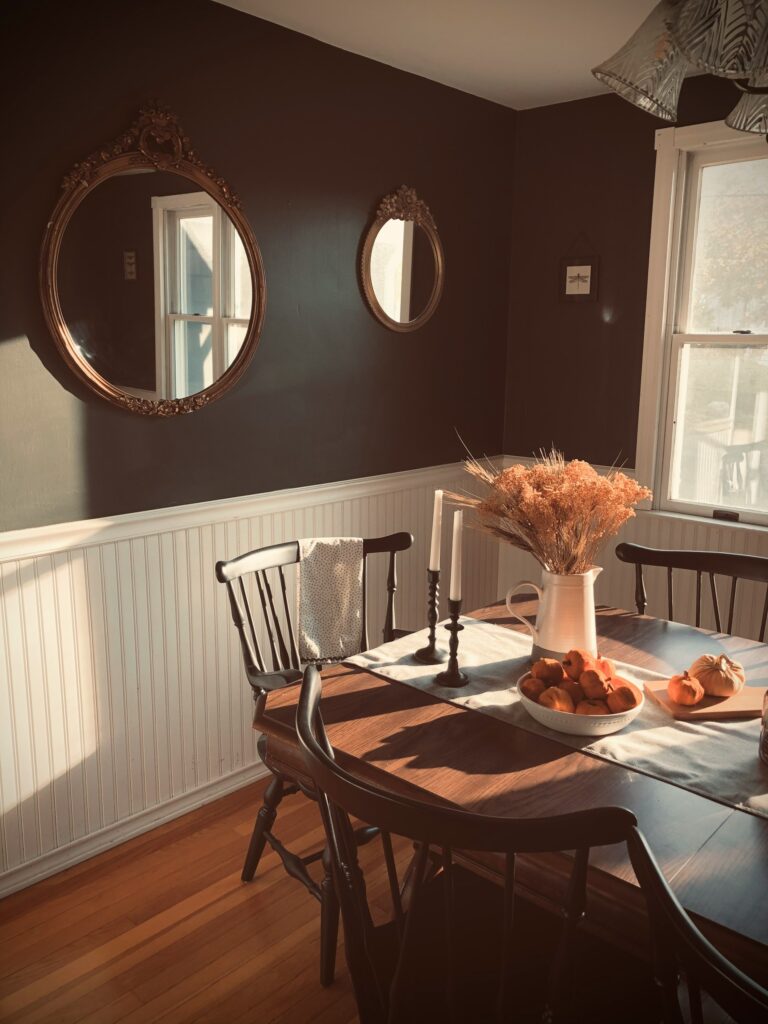

Hey friends! 👋
If you’ve been following me for a while, you know I spend way too much time staring at blank walls, mentally rearranging frames, and dragging my husband to yet another flea market “just to look.” So when so many of you started DMing me the same question over and over—”What do I even put on my dining room walls?!”* — I knew it was time to sit down and write the guide I wish I’d had when we moved into our first house.
Here’s the truth: the dining room is one of the most overlooked rooms in the entire house. We obsess over the living room. We create Pinterest boards for our bedrooms. But the dining room? It usually gets a table, some chairs, and… nothing else. And that’s such a shame, because it’s the room where birthdays happen, where Sunday dinners turn into three-hour conversations, where your kid does homework, and where you host that one friend who “just wants to see the new place.”
So today, I’m pulling back the curtain on every single dining room wall decor idea I’ve tried, tested, Pinterest-stalked, and fallen in love with over the years. Some of these cost less than your Target run this week. Others are a bit more of an investment. All of them will make your dining room feel like *you* actually live there — not like a showroom nobody’s allowed to touch.
Grab a coffee (or wine; no judgment, it’s 2 PM somewhere), and let’s talk dining room wall decor ideas.
Read More: 35 Dining Room Decor Ideas I’ve Actually Used in Real Client Homes (2026 Edition)
Why Dining Room Wall Decor Matters More Than You Think
Before we dive into the fun stuff, let’s talk about why this even matters.
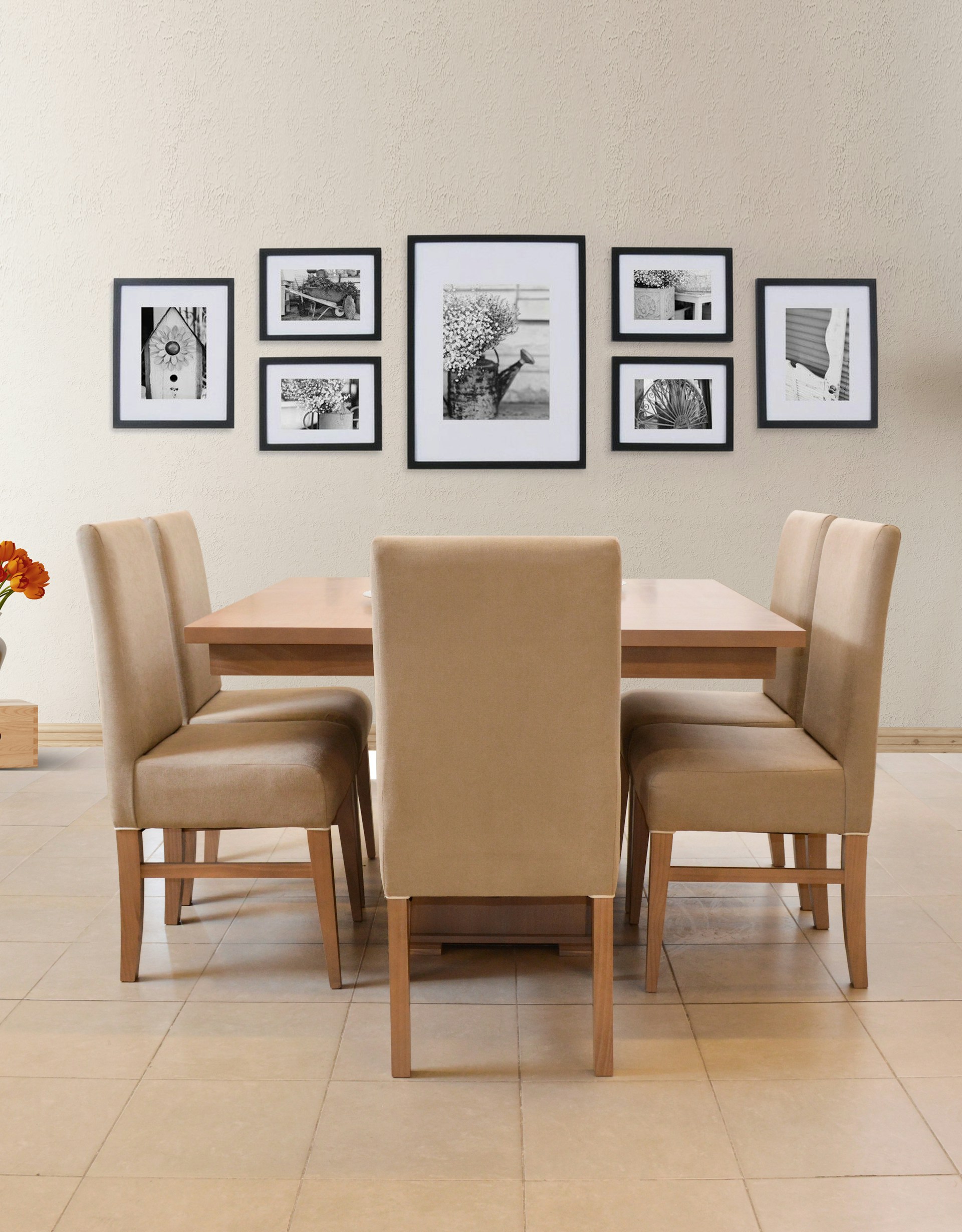
Your dining room walls set the entire mood of the meal. Think about it — when you’re sitting at the table, you’re not looking at the floor or the ceiling most of the time. You’re looking straight ahead, at eye level, at whatever is hanging on that wall. That’s prime real estate for setting a vibe, sparking conversation, or just making the room feel finished instead of half-decorated.
I learned this the hard way. For almost a year after we moved in, our dining room had one single framed print my mother-in-law gave us (bless her heart, but it was not it). Every time we had people over, I noticed guests’ eyes drifting to that empty wall like something was missing — because something *was*. The second I filled it in with a proper gallery wall, the whole room came alive. Same table. Same chairs. Completely different feeling.
So if you’ve been putting off decorating this space because it feels “less important” than your living room, I’m here to gently tell you: it’s not. Let’s fix that wall.
1. Start With a Gallery Wall (My All-Time Favorite Dining Room Wall Decor Idea)
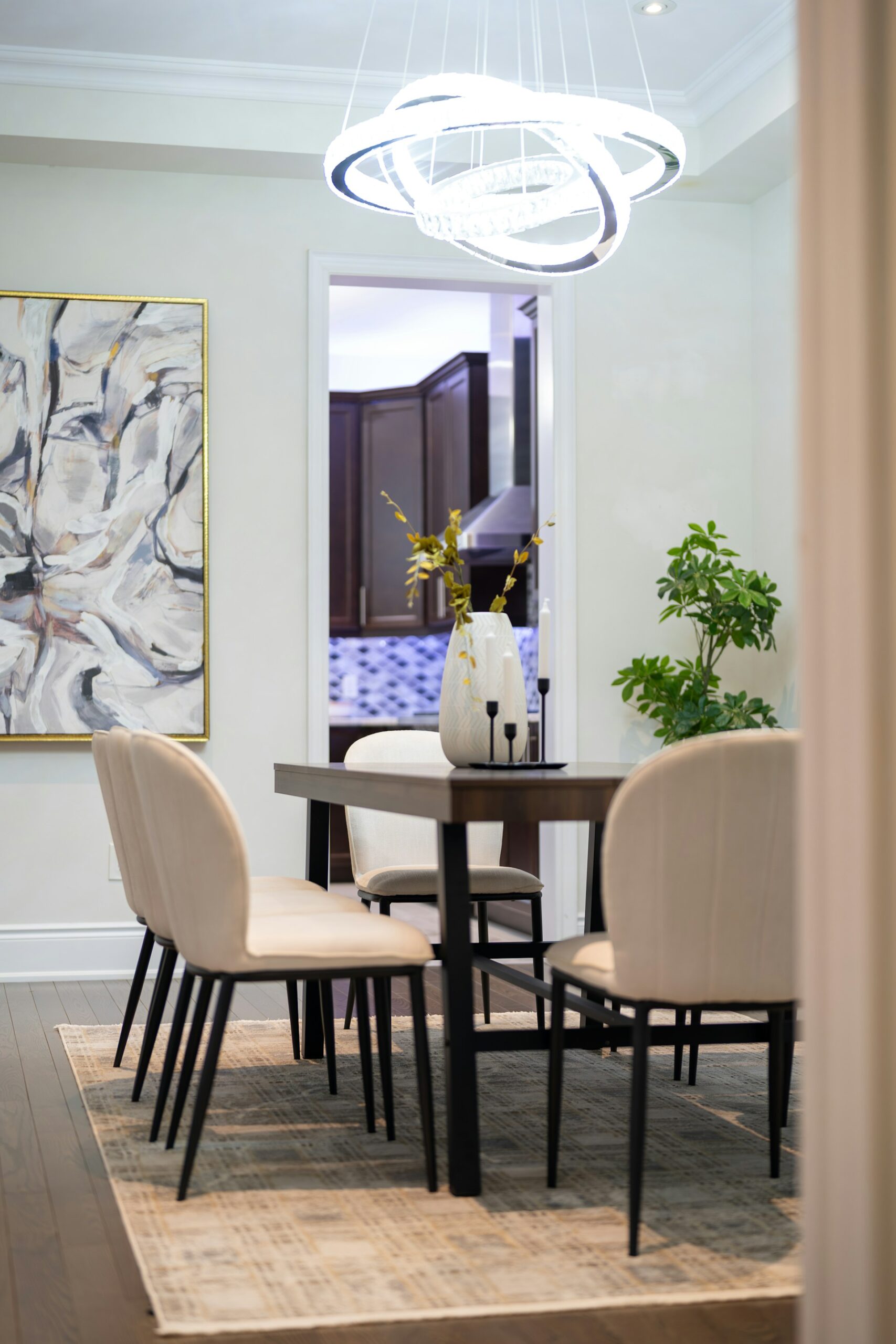
I have to start here because it’s genuinely my favorite trick in the book. A gallery wall is a curated collection of frames, art, mirrors, or objects arranged together on one wall, and it is *the* single best way to make a dining room feel intentional and personal.
Here’s how I approach mine every single time:
- Mix frame sizes and finishes. Don’t buy a matching set. I use a combination of gold, black, and natural wood frames because they feel collected over time rather than bought in one trip.
- Anchor with one large piece. Pick your biggest print or mirror first and build around it.
- Leave breathing room. I know the temptation is to cram every wall inch full, but 2-3 inches of spacing between frames keeps it from feeling cluttered.
- Use butcher paper to plan it out. Trace your frames onto paper, cut them out, and tape them to the wall before you commit to a single nail hole. Trust me on this one — I’ve patched way too many unnecessary holes.
Gallery walls work in literally any style of home, from farmhouse to mid-century modern to full maximalist boho. It’s endlessly customizable, which is exactly why it tops my list of dining room wall decor ideas.
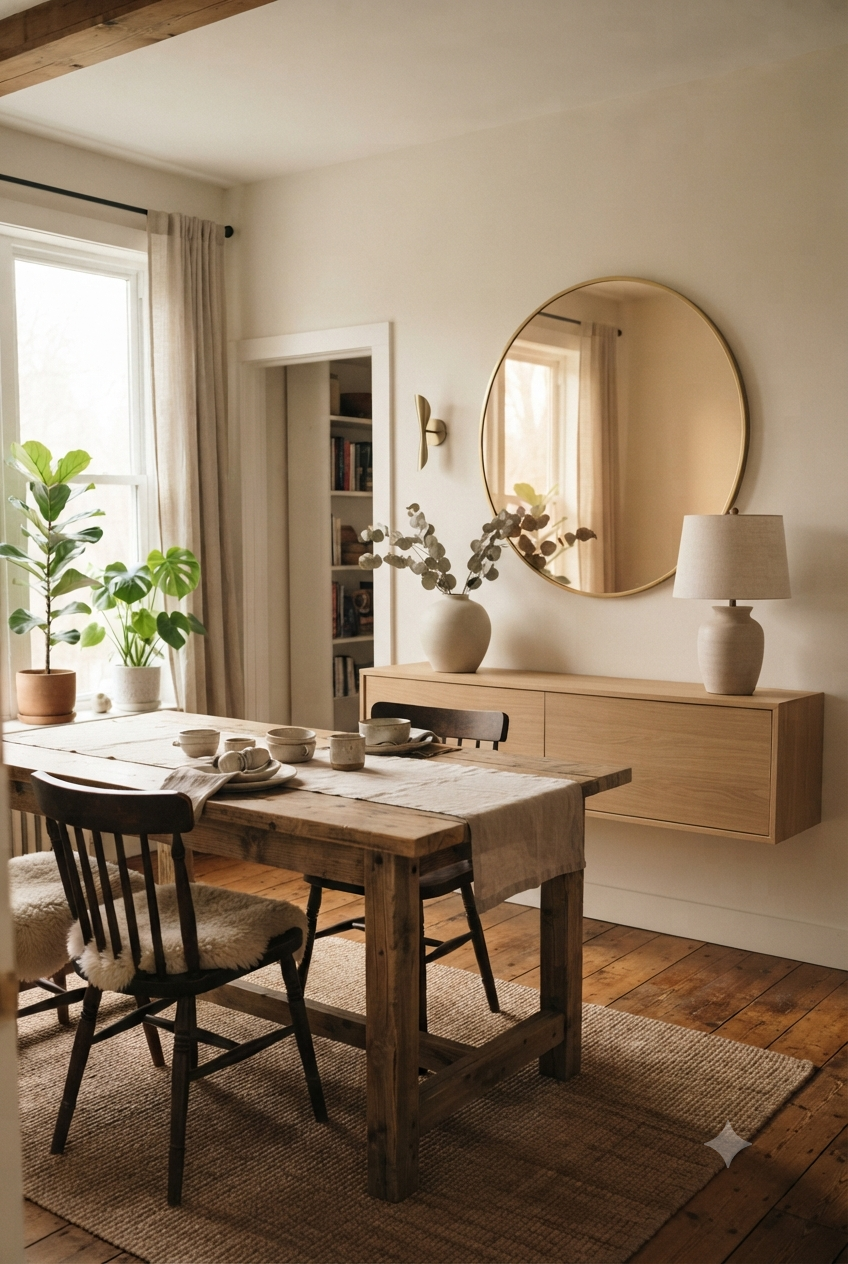
2. Hang an Oversized Statement Mirror
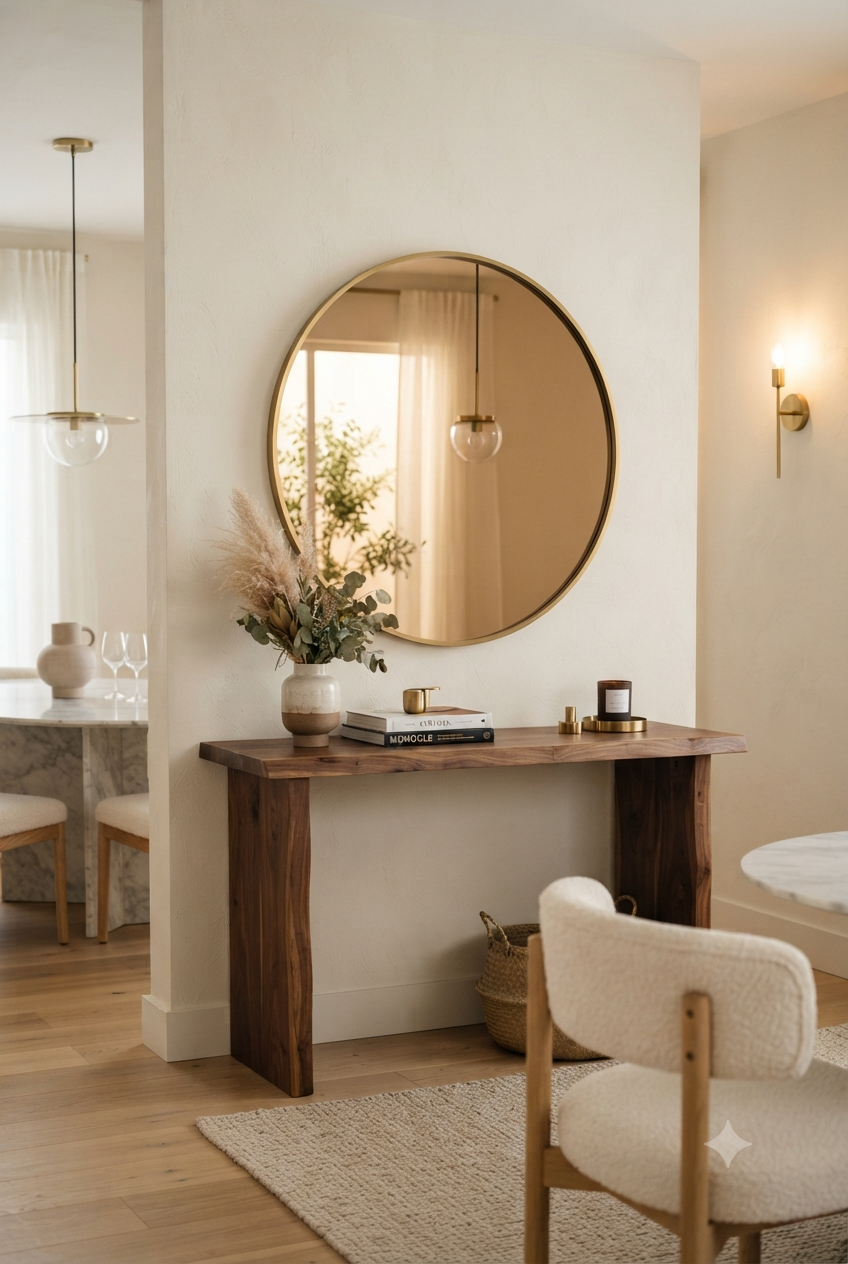
If there’s one piece of advice I give every single friend who asks me for dining room help, it’s this: buy the biggest mirror you can comfortably afford, and hang it on the wall behind your buffet or across from your window.
Why? Two reasons.
First, mirrors bounce light around the room, which instantly makes a dining room feel bigger and brighter — especially helpful if your dining room, like a lot of ours, doesn’t get a ton of natural light. Second, a large statement mirror does the visual “heavy lifting” of a piece of art without you having to commit to a specific color palette or theme. It just works.
My personal rule: the mirror should be roughly two-thirds the width of the furniture piece below it (like your buffet, console, or sideboard). Go bigger and it can start to feel top-heavy; smaller and it looks like an afterthought.
3. Try Wallpaper on Just One Wall (Accent Wall Magic)
I resisted wallpaper for YEARS because I was terrified of commitment. Then I did a peel-and-stick wallpaper accent wall in our dining room, and I genuinely regret waiting so long.
You don’t need to wallpaper the entire room (unless you want to — go off, queen). A single accent wall, usually the one your dining table faces or backs up against, gives you all the drama of wallpaper without overwhelming the whole space or breaking your budget.
Some of my favorite wallpaper directions for a dining room:
- Botanical or leafy printsfor a fresh, garden-party feel
- Textured grassclothfor warm, organic, high-end texture
- Moody florals in deep greens, navies, or burgundy for a more dramatic dinner-party energy
- Simple stripes if you want something classic that won’t feel dated in five years
And here’s a little insider secret: peel-and-stick wallpaper has come SO far. You can genuinely get a designer look for a fraction of the price and commitment of traditional wallpaper.
4. Display Decorative Plates as Wall Art
This one might sound old-fashioned, but hear me out — decorative plate walls are having a real moment again, and I am fully here for it.
Mismatched vintage plates, thrifted china, or even a set of plates you already own can become one of the most unique dining room wall decor ideas out there. It’s a lovely nod to tradition, it’s incredibly affordable if you’re thrifting, and it tells a story in a way that generic canvas art just can’t.
To make it work:
- Use plate hangers (they’re cheap and don’t damage the plates)
- Mix patterns but stick to a cohesive color story so they don’t feel chaotic
- Arrange in a circular, oval, or asymmetrical cluster rather than a strict grid for a more organic, collected-over-time look
This is one of those ideas that photographs beautifully and always gets a “wait, where did you get that?” from guests.
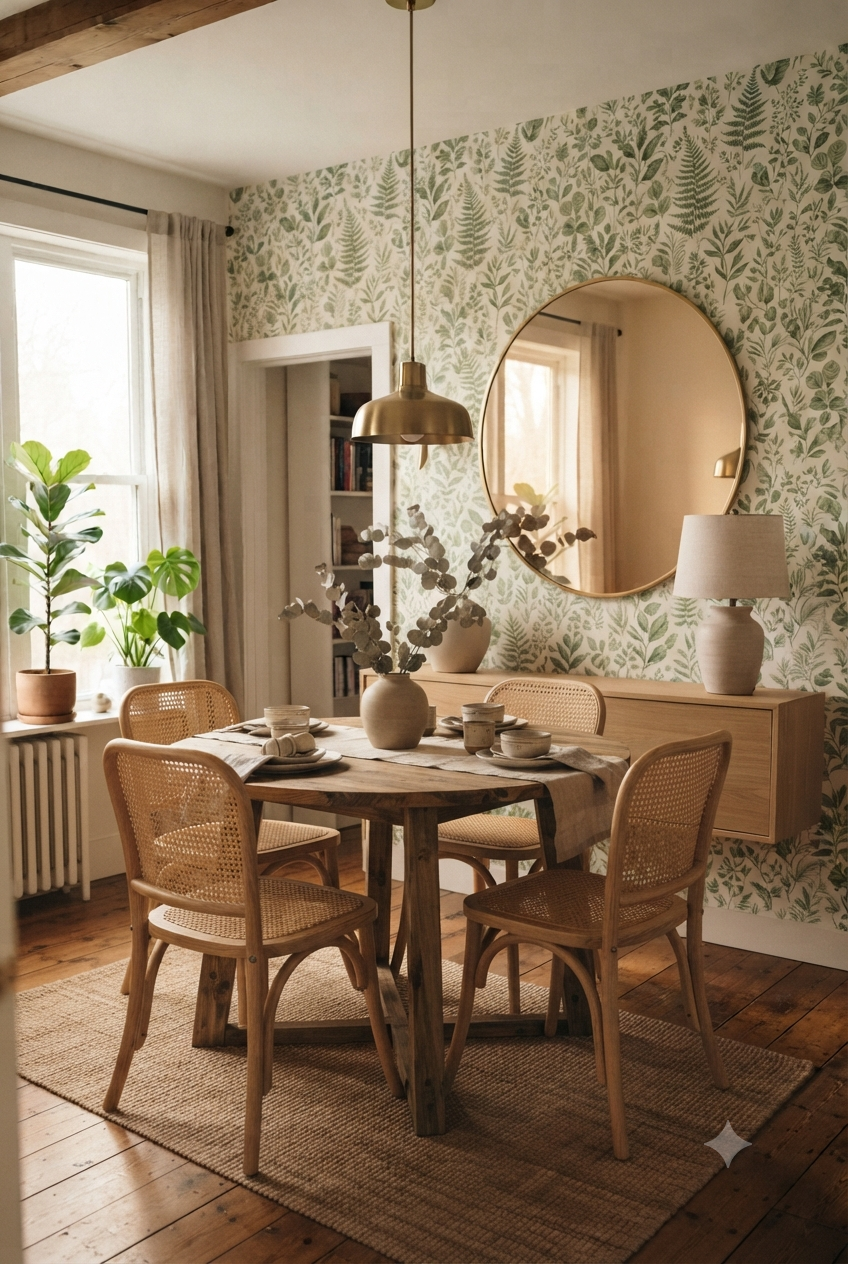
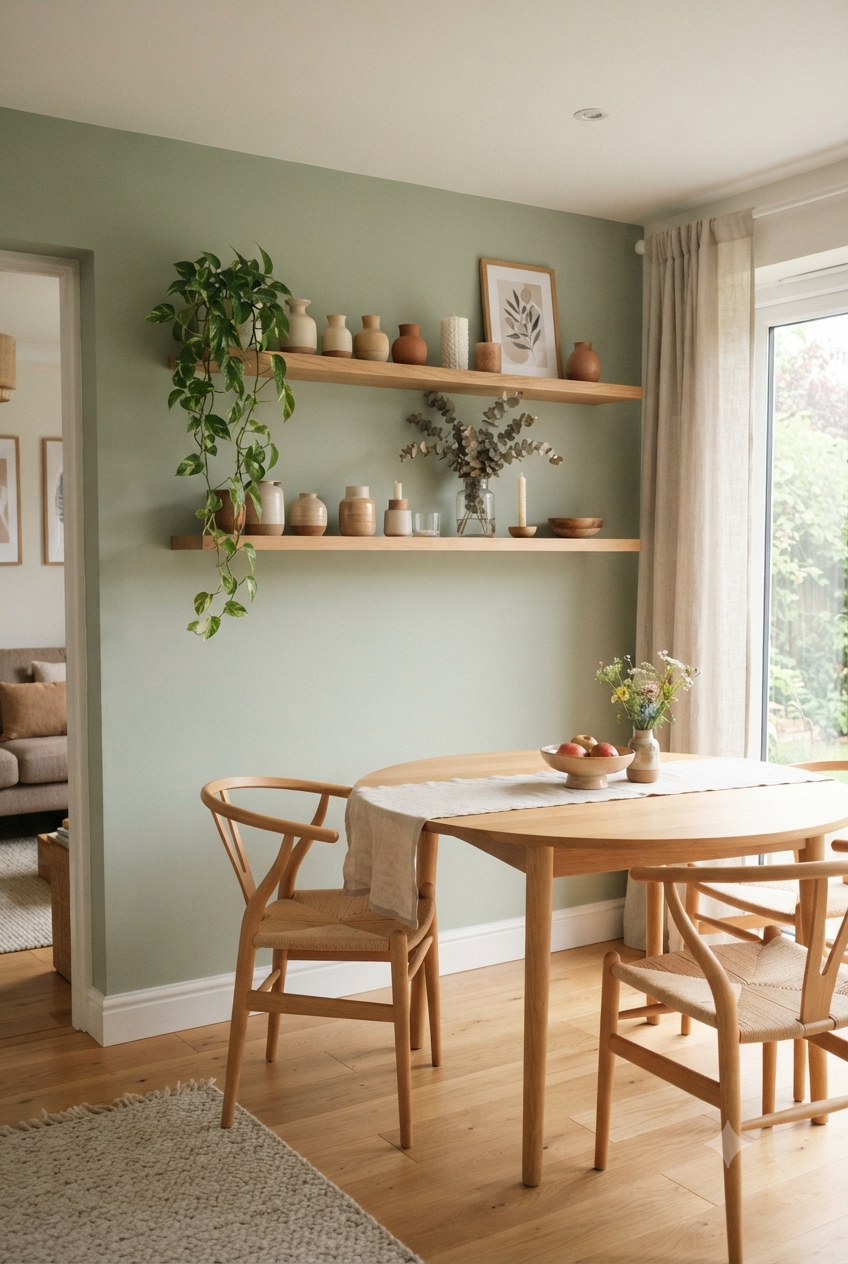
5. Install Floating Shelves for Rotating Decor
If you’re someone who gets bored easily (guilty), floating shelves are a total game-changer. Instead of committing to one static piece of art, you get a little “stage” where you can rotate seasonal decor, favorite ceramics, small art prints, or even fresh greenery.
I have one long floating shelf above my buffet, and I switch it up constantly—pumpkins and warm-toned candles in the fall, greenery and citrus in the spring, and simple neutral vases the rest of the year. It keeps the whole room feeling fresh without ever having to repaint or rehang anything major.
This is honestly one of the most practical dining room wall decor ideas if you like to decorate seasonally but don’t want to redo your whole gallery wall every few months.
6. Go Bold With a Large-Scale Piece of Art
Sometimes the answer isn’t a dozen small things—it’s one big, beautiful thing.
An oversized painting, print, or tapestry above your buffet or centered on the main wall can anchor the entire dining room without any additional decor needed. This is a fantastic option if you love a more minimalist look, or if you simply don’t want to deal with the planning and leveling that a gallery wall requires.
When choosing a large-scale piece, I always tell people to pick something with colors that complement (not necessarily match) your dining chairs, rug, or curtains. It doesn’t need to match exactly—in fact, a slightly unexpected color pairing often looks more curated than a perfectly matchy room.
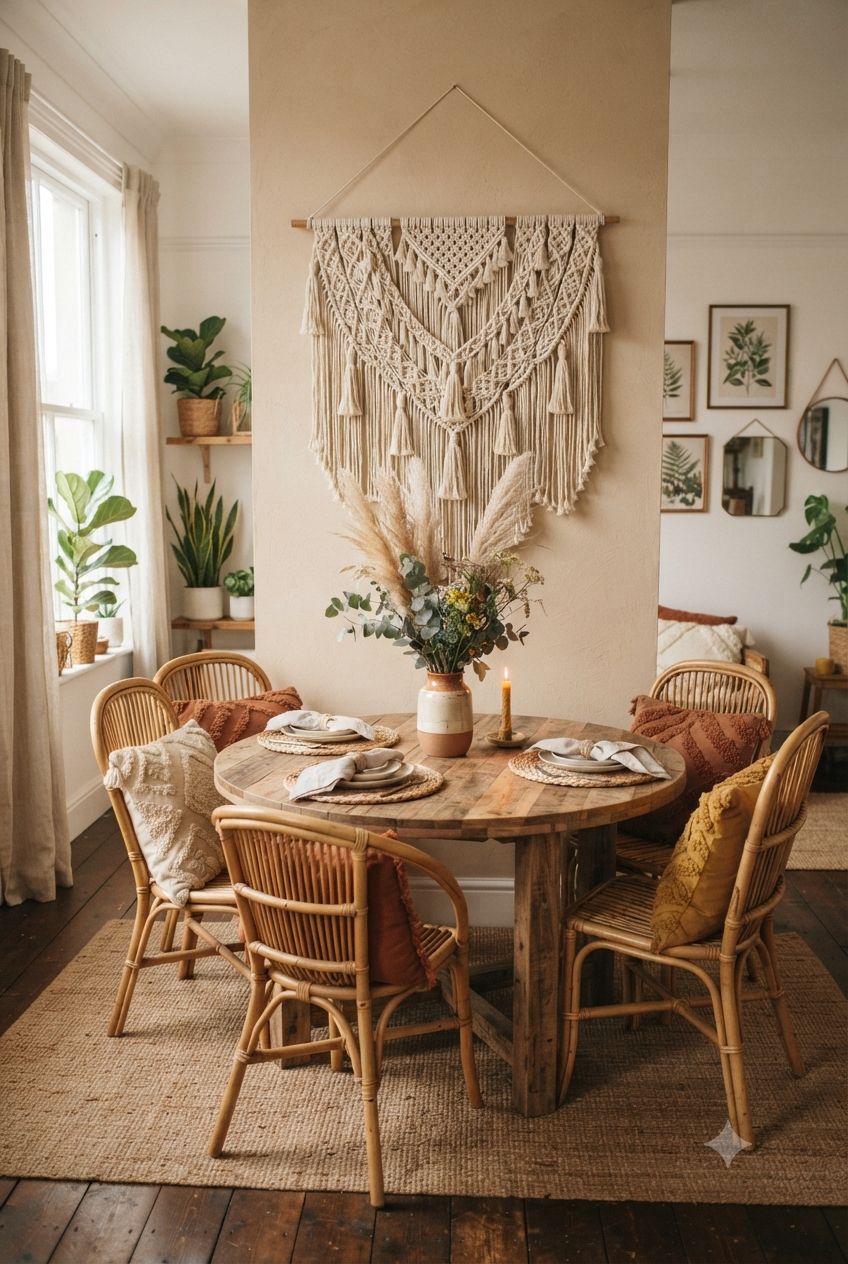
7. Layer in Textiles: Tapestries, Rugs-as-Art, or Fabric Panels
This is a slightly unconventional dining room wall decor idea, but it’s one of my favorites for adding warmth and texture, especially if your dining room has hard surfaces like tile floors or a lot of wood.
Hanging a woven tapestry, a small vintage rug, or even a framed piece of beautiful fabric on the wall adds a softness that art and mirrors simply can’t replicate. It also muffles sound a little, which is a nice bonus if your dining room tends to echo (ours definitely does with our hardwood floors).
Look for:
- Vintage kilim or dhurrie rugs, hung with a simple wooden dowel
- Macramé wall hangings for a boho touch
- Batik or block-print textiles for global-inspired flair
8. Use Wall Sconces as Both Light and Decor
Lighting is decor too, and I think we forget that way too often. Wall sconces flanking a mirror, buffet, or piece of art do double duty — they provide warm, ambient light for dinner parties, and they add architectural interest to an otherwise flat wall.
I especially love this for dining rooms where a chandelier or pendant is already doing the heavy lifting over the table. Adding sconces on the side walls creates a layered lighting effect that instantly makes the whole room feel more intentional, more romantic, and honestly, more expensive-looking than it actually was.
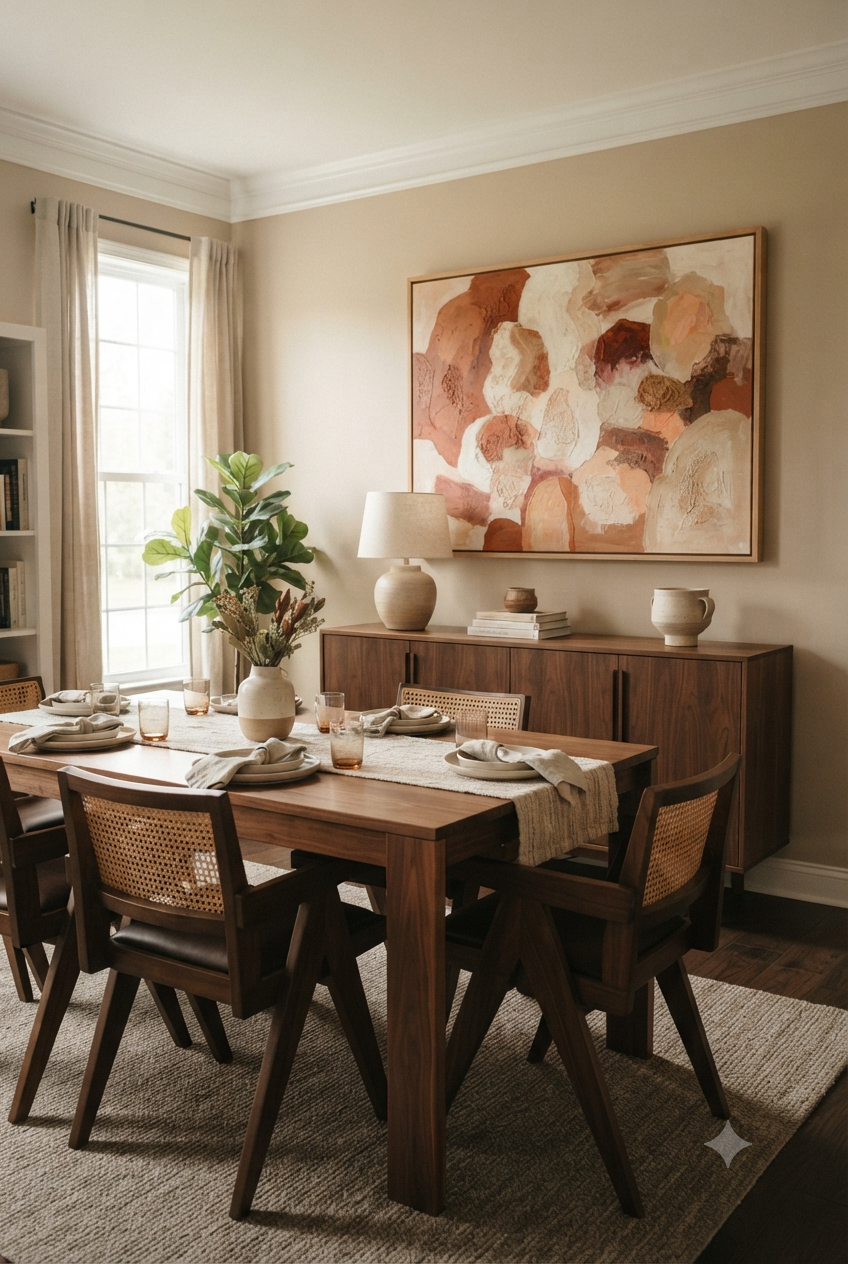
9. Add Architectural Interest With Molding or Wainscoting
If you’re up for a slightly bigger project, picture frame molding, wainscoting, or board and batten can transform a plain dining room wall into something that looks custom-built, even in an older or more basic home.
This is less about “adding decor” in the traditional sense and more about creating a beautiful backdrop that art and furniture will sit on top of. I did a simple picture-frame molding treatment in my own dining room, painted it a soft off-white, and it completely changed the character of the room before I even hung a single piece of art on it.
If you’re renting or not ready for a permanent update, there are peel-and-stick and lightweight foam molding options that mimic the look without the commitment.
10. Try a Curated “Object Wall” Instead of Traditional Art
Not everything on your wall needs to be a frame. Some of the most interesting dining rooms I’ve seen (and decorated) mix in unexpected objects:
- Vintage hats or baskets
- A collection of wooden spoons or kitchen tools (fun for a farmhouse dining room)
- Botanical specimens or pressed florals in shadow boxes
- Small woven wall baskets in a cluster
- A collected set of vintage clock faces or mirrors of varying shapes
This approach feels incredibly personal because it usually comes from things you already own, thrifted finds, or travel souvenirs, rather than something bought specifically to “decorate.”
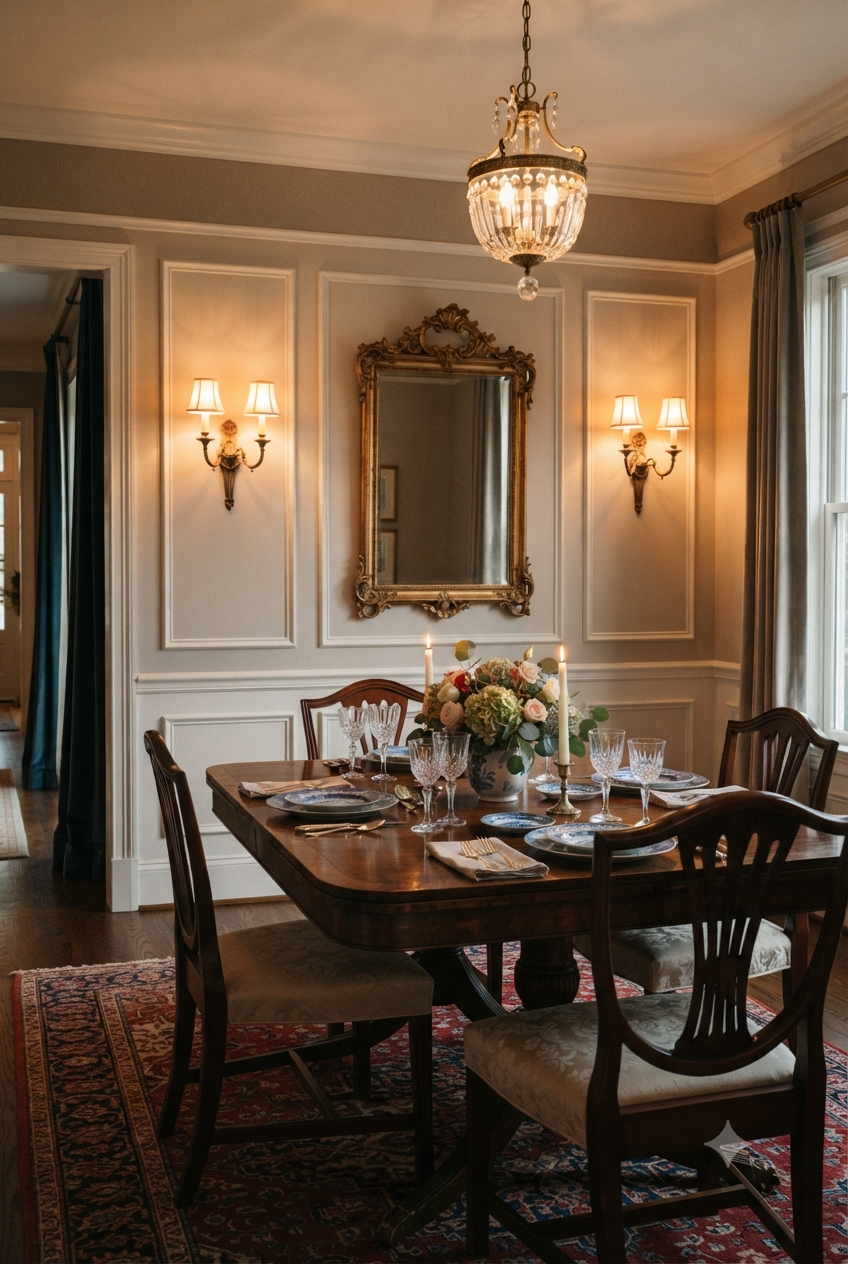
Dining Room Wall Decor Ideas by Style
I get asked a lot about how to adapt these ideas to a specific aesthetic, so let’s break it down by style, because what works for a moody, traditional dining room won’t necessarily work for a bright Scandinavian one.
Farmhouse Dining Room Wall Decor
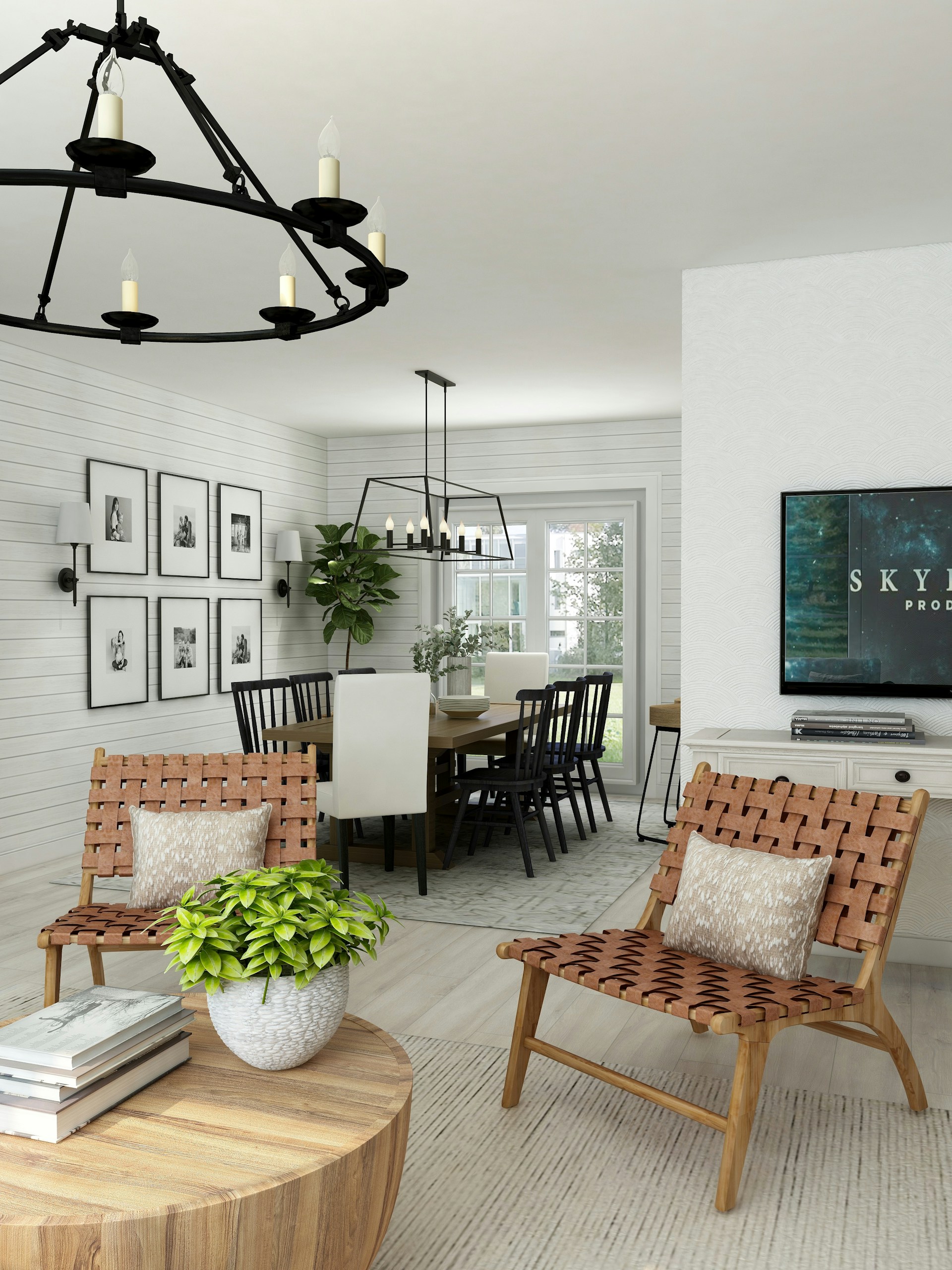
Think warm wood tones, vintage-inspired signs, woven baskets, and a mix of black and natural finishes. A large round or oval mirror with a black frame is a farmhouse dining room staple, and so is a “shiplap” style accent wall paired with simple botanical art.
Modern Dining Room Wall Decor
Clean lines, minimal clutter, and a “less is more” mindset. One or two large-scale abstract art pieces, a sculptural mirror, or a single striking light fixture as the visual focal point works beautifully here. Avoid overly busy gallery walls; modern spaces thrive on negative space.
Traditional Dining Room Wall Decor Ideas
Classic gold-framed art, symmetrical arrangements, elegant sconces, and rich wallpaper. Traditional dining rooms handle drama well — think deep jewel-toned walls, ornate mirrors, and formal still-life paintings.
Boho Dining Room Wall Decor Ideas
Layered textures are your best friend here. Combine a woven tapestry, mismatched frames, dried florals, and warm, earthy tones. Nothing needs to match perfectly—in fact, the more eclectic, the better.
Coastal Dining Room Wall Decor
Light, breezy, and airy. Think rattan mirrors, light wood tones, subtle blue and white color palettes, and botanical or abstract art with a soft color story. Woven wall baskets also fit beautifully into this style.
Budget-Friendly Dining Room Wall Decor Ideas
Not everyone wants (or needs) to spend a fortune on this, and honestly, some of my favorite dining room moments came from the cheapest ideas on this whole list:
- Print your own art. Sites with affordable or free printable art let you download, print, and frame gorgeous pieces for the cost of a frame.
- Thrift your frames. Buy random frames at a thrift store and spray paint them all one cohesive color for an instant matching gallery wall.
- Use what you have. Old family photos, kids’ artwork professionally framed, or travel postcards can be some of the most meaningful wall decor you’ll ever hang.
- DIY a large canvas. A simple abstract painting on a large canvas costs a fraction of a store-bought piece and can be done in an afternoon.
- Rearrange before you buy. Sometimes the best “new” dining room wall decor ideas are simply moving art you already have in another room.
Small Dining Room Wall Decor Ideas
If you’re working with a smaller dining space (I feel you — my first apartment’s “dining room” was basically a hallway), here’s what actually works:
- Vertical gallery walls draw the eye up and make ceilings feel taller.
- Mirrors are non-negotiable. In a small dining room, a mirror is doing more work than almost any other decor choice because of how much light and depth it adds.
- Skip oversized furniture-mounted decor and instead focus on one or two well-chosen pieces rather than crowding a small wall.
- Light, pale wallpaper in a small dining nook can add personality without making the space feel boxed in the way a dark, heavy piece of furniture-mounted art might.
A Few Mistakes I’ve Made (So You Don’t Have To)
I promised you a real, honest post, so let’s talk mistakes, because I’ve made plenty of them.
Hanging things too high. The golden rule is that the center of your art should sit at eye level, roughly 57-60 inches from the floor. I hung our first piece of dining room art way too high because I was scared it would look weird close to the buffet below it. It looked weirder floating up near the ceiling.
Being too matchy-matchy. My very first gallery wall used only identical black frames in identical sizes, and while it was technically neat, it read more like a corporate office hallway than a home. Mixing textures and sizes made a world of difference.
Ignoring scale. A small, dainty piece of art on a huge, wide wall just gets swallowed up. If your wall feels empty even with something hung on it, you probably need to go bigger or add more pieces around it.
Forgetting the room needs to work at both eye level and seated level. Remember, most of the time you’re seeing this room from a seated position at the table. Stand up, then sit down, and check how your decor reads from both angles.
How to Choose the Right Color Palette for Your Dining Room Walls
Okay, let’s talk color for a second, because I think this is where a lot of us get stuck. You can have the most gorgeous frame collection in the world, but if the colors fight with your table, your chairs, or your rug, the whole room feels “off” in a way that’s hard to pinpoint.
Here’s the approach I use every single time I’m styling a dining room wall:
Start with your biggest fixed element. That’s usually your table, your flooring, or an existing rug. Pull two or three colors directly from that piece and build your wall decor palette around them. If your table is a warm walnut, for example, I’d lean into warm creams, rust, and deep green tones for art and frames rather than cool grays and icy blues.
Use the 60-30-10 rule loosely. Sixty percent of your wall decor colors should be a dominant neutral (think cream, soft white, or warm gray); thirty percent a secondary tone (a sage green, a dusty blue, or a warm terracotta); and ten percent a punch of something bold, like a black frame, a brass accent, or a deep jewel tone in one statement piece.
Don’t be afraid of a moody palette. Dining rooms are one of the few spaces in the house where a darker, richer wall color or decor palette genuinely works in your favor. We tend to eat dinner in the evening, with lower light, and dark tones like navy, forest green, or deep burgundy actually feel cozier and more intimate under candlelight or warm bulb lighting than they would in a sunny home office.
Test everything in the room’s actual light. I cannot stress this enough — a print that looks gorgeous under the fluorescent lighting of a home decor store can look completely different once it’s hanging under your dining room’s warm pendant light at 7 PM. Always test swatches, prints, or fabric samples directly on your wall before committing.
Seasonal Dining Room Wall Decor Ideas
One of my favorite little secrets for keeping a dining room feeling alive year-round is treating your wall decor as something that can shift with the seasons, not just something you set once and forget forever.
Spring: Swap in fresh botanical prints, add a vase of eucalyptus or tulips on a floating shelf, and lighten up your gallery wall with pastel-toned art or soft linen table runners hung as textile art.
Summer: Lean into breezy, coastal-inspired pieces—think woven baskets, rattan mirrors, and citrus-toned still life prints. This is also a great season to swap in lighter, sheer curtains if your dining room windows are part of the same wall.
Fall: This is when I go all-in on warm, moody tones. Deep amber and rust-colored art, dried floral arrangements, and warm brass accents all shine in a fall dining room. A simple wreath hung on the wall (not just the front door!) is an underrated fall decor trick.
Winter: Candles, warm metallics, and a slightly more formal, elegant gallery wall arrangement feel right for the holiday season. This is also the time of year I bring out our decorative plate collection in full force, since it photographs so beautifully for holiday dinners.
You absolutely do not need to overhaul your entire wall every three months—even swapping one or two smaller elements on a floating shelf or in a rotating frame can refresh the whole feel of the room without a huge time or money investment.
Dining Room Wall Decor Ideas for Rentals
If you’re renting, I know the eternal struggle of wanting a beautifully decorated dining room without upsetting your landlord (or your security deposit). The good news is that almost everything on this list can be adapted for a rental-friendly approach:
- Command strips and hooks have genuinely gotten strong enough to hold reasonably sized framed art and even small floating shelves.
- Peel-and-stick wallpaper removes cleanly from most painted walls and is one of the single best rental-friendly upgrades you can make.
- Leaning large art against the wall instead of hanging it is a completely valid styling choice, and honestly, it’s a look that a lot of designers use intentionally, even in owned homes.
- Tension rods can be used to hang lightweight tapestries or fabric panels without a single nail.
- Removable molding and trim made from lightweight foam or MDF can often be installed with strong adhesive rather than nails and removed cleanly when you move.
Frequently Asked Questions About Dining Room Wall Decor Ideas
What is the best height to hang wall art in a dining room?
Center your art or the overall gallery wall arrangement around 57-60 inches from the floor, which is standard “eye level” height. In a dining room specifically, keep in mind guests are often seated, so slightly lower than a hallway or living room placement can feel more natural.
Should dining room wall decor match the dining table?
It doesn’t need to match, but it should complement the overall tone of the room. I always aim for a shared color thread or a similar warmth/coolness in tones rather than an exact match.
What’s a good focal point for a small dining room?
A large mirror is almost always my go-to recommendation for small dining rooms. It adds light, depth, and visual interest without requiring much floor or wall space commitment.
How do I make my dining room walls look expensive on a budget?
Focus on cohesive framing, proper scale, and one “statement” element (a large mirror, an oversized art piece, or a wallpapered accent wall). A cohesive look almost always reads more expensive than a room full of small, unrelated pieces, regardless of the actual price tag.
Is wallpaper still in style for dining rooms?
Yes, and it’s arguably more popular now than it’s been in years, especially with the rise of easy-to-install peel-and-stick options that make it accessible for renters and commitment-phobes alike.
Wrapping This Up
If you take just one thing away from this whole post, let it be this: your dining room deserves the same love and attention you give the rest of your home. It doesn’t need to be perfect, matchy, or Pinterest-catalog-worthy. It needs to feel like *you*.
Start small if you need to — one mirror, one gallery wall, one thrifted frame. Build from there. I promise the difference between a blank dining room wall and a decorated one is bigger than you think, and it’s one of those upgrades that makes every single meal in that room feel a little more special.
I’d genuinely love to see what you do with your own space. Tag me in your dining room transformations—I read every single one, and I’m always looking for new inspiration to add to my own ever-changing walls too.
Until next time, happy decorating! 🖼️
Read More: 35 Dining Room Decor Ideas I’ve Actually Used in Real Client Homes (2026 Edition)