
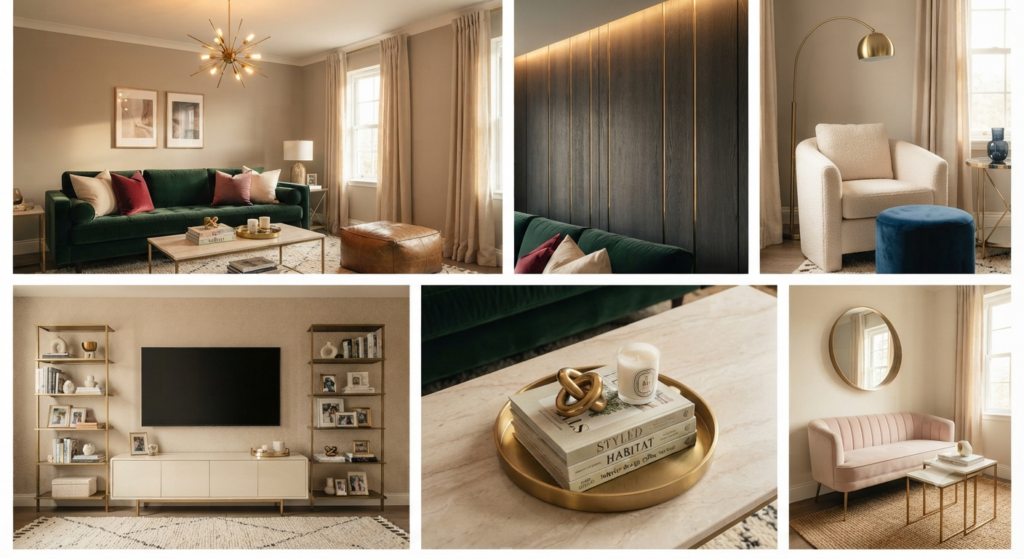

I still remember the day I stood in the middle of my own glam living room, paint swatches in one hand and a cold cup of coffee in the other, wondering why the space felt flat despite the “expensive” furniture I had just bought. I had been designing cozy living rooms for clients for years, yet my own glam living room refused to come together. It took three failed color schemes, one very regrettable gold mirror, and a lot of trial and error before I finally understood what actually makes a glam living room feel luxurious instead of loud.
This isn’t a recycled list pulled from a dozen other blogs. This is what I learned by doing it myself—as a home decor designer who has renovated her own space, coached clients through their own living room decor ideas, and made every mistake so you don’t have to. If you’ve been searching for real, tested advice on how to build a glam living room that still feels warm and livable, pull up a chair. This one’s from experience, not a template.
What Exactly Is a Glam Living Room?
When people hear “glam living room,” they often picture something cold and showroom-like — all mirrors, no soul. That’s not what glam is supposed to be. A true glam living room blends old Hollywood elegance with modern comfort. Think soft velvet textures, metallic accents, a touch of drama in the lighting, and a color palette that feels rich rather than gaudy.
The mistake I made early on was treating “glam” as a synonym for “shiny.” I filled my first attempt with too much gold and mirrored furniture, and the room ended up feeling like a hotel lobby rather than a home. Real glam is restraint dressed up as luxury. It’s one statement chandelier, not five gold lamps. It’s a single tufted velvet sofa, not an entire room of shine.
If you’re starting from scratch, my advice is simple: pick one “hero” element — a wall, a piece of furniture, or a light fixture — and let everything else support it quietly.
READ MORE: 35 Dorm Bedding Ideas That Will Make Your College Room Feel Like Home

Living Room Wall Designs That Actually Work for Glam Spaces
Your walls set the tone before anyone even sits down, so getting your living room wall designs right is non-negotiable. Here’s what worked in my own home and in several client projects.
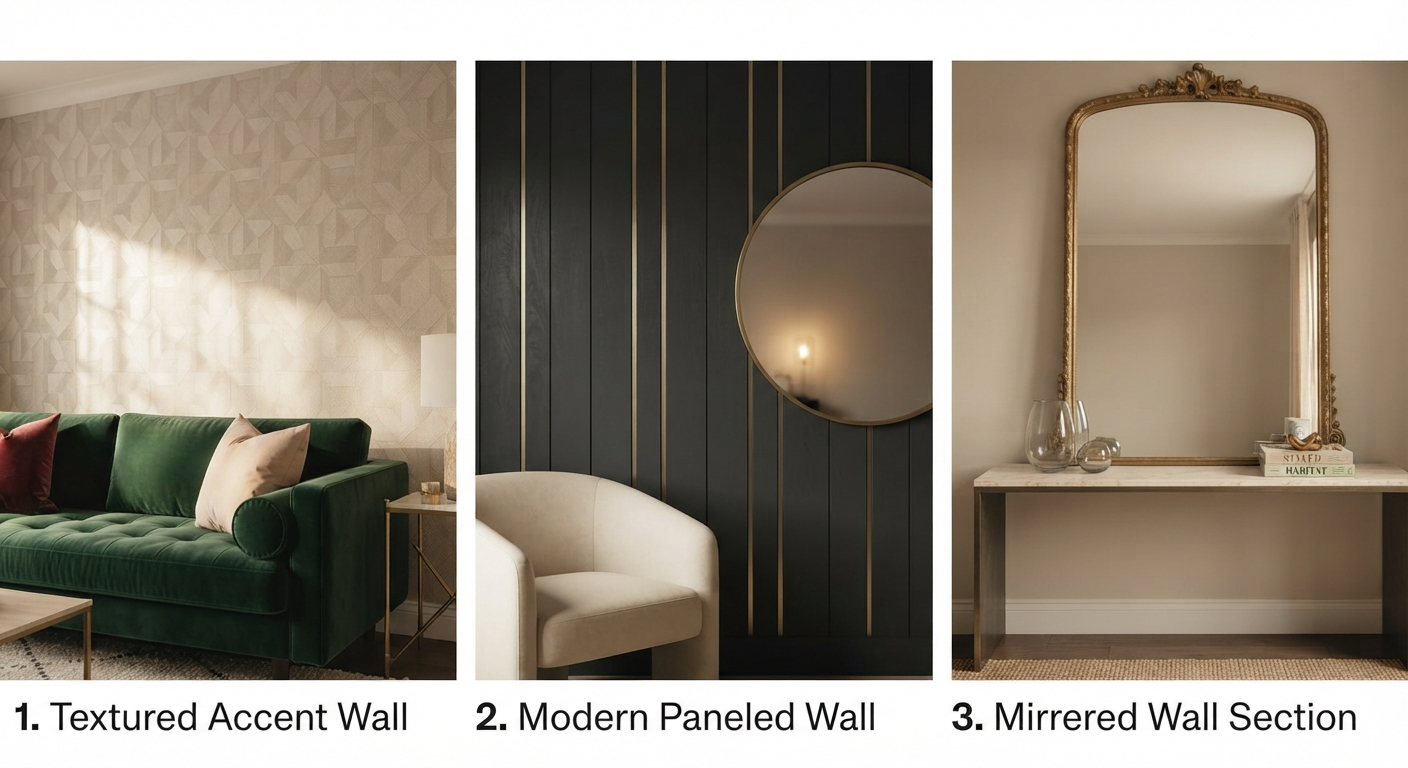
1. Textured Accent living room walls designs
Flat paint reads flat, no matter how expensive the shade. I added a subtle textured wallpaper with a geometric pattern in a soft champagne tone behind my sofa. It caught the light differently throughout the day, which gave the whole room a sense of movement without screaming for attention.
2. Paneled Walls With a Modern Twist
Classic wainscoting or wall paneling, painted in a deep emerald or navy, instantly elevates a space. I used vertical wood paneling on one wall and painted it a rich charcoal, then added slim brass strips between panels. It’s one of the most requested wall design ideas from my clients now, because it photographs beautifully and works whether your style leans glam or transitional.
3. Mirrored Wall Sections
Instead of covering an entire wall in mirror (which can feel dated fast), I framed a single large mirror panel with a brass or antique gold frame and let it act as art. This trick makes a small glam living room feel twice as big while still keeping things tasteful.
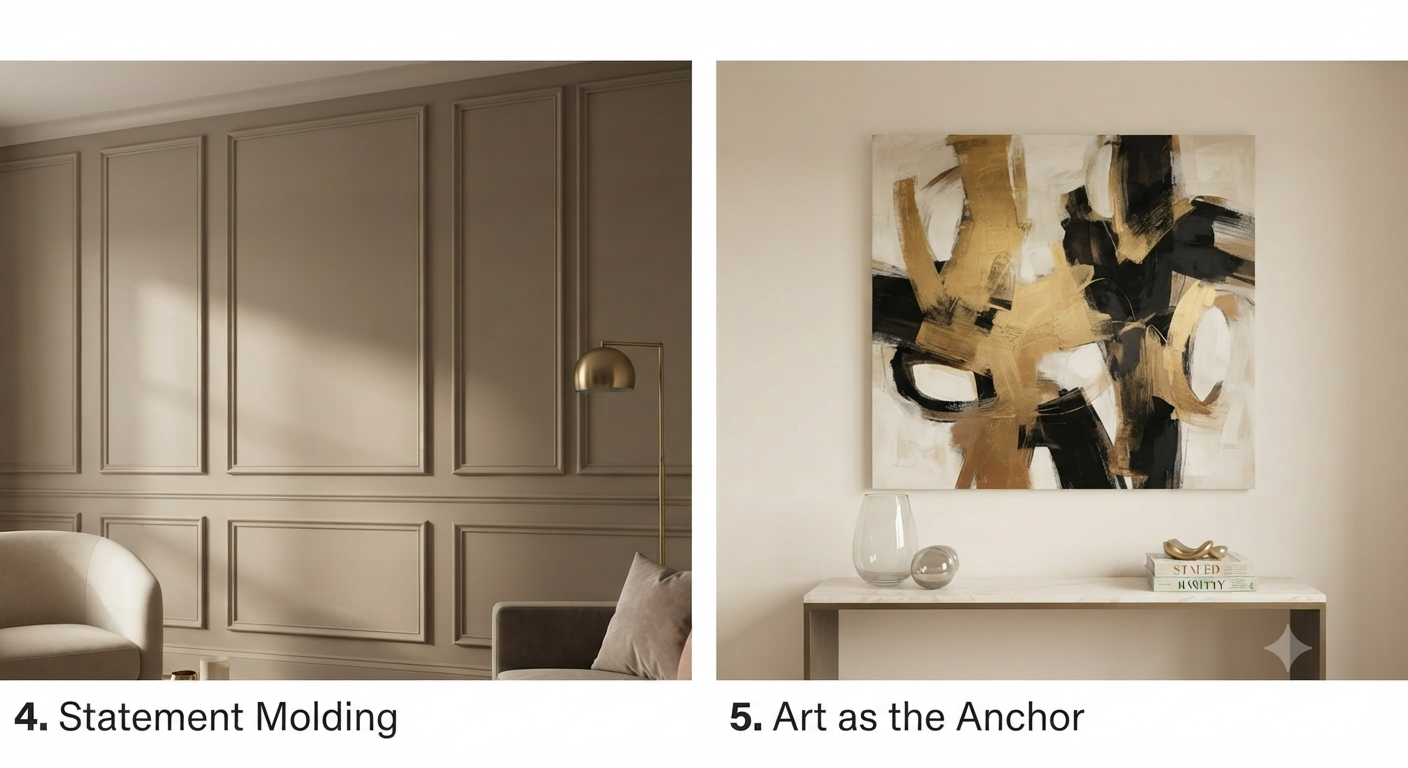
4. Statement Molding
Adding picture-frame molding to a plain wall, then painting the wall and molding in the same tone, creates depth without adding color complexity. This is a favorite among people who want cozy living rooms with a hint of formality — it feels layered and intentional.
5. Art as the Anchor
Sometimes the best living room wall designs aren’t structural at all. A single oversized abstract piece in gold, black, and cream tones can do more work than three smaller accent pieces combined.
Building a Color Palette That Feels Rich, Not Overdone
Color is where most glam living rooms go wrong. People assume more gold and more contrast equals more luxury. In reality, the richest-looking rooms I’ve designed rely on restraint.
My go-to palette formula:
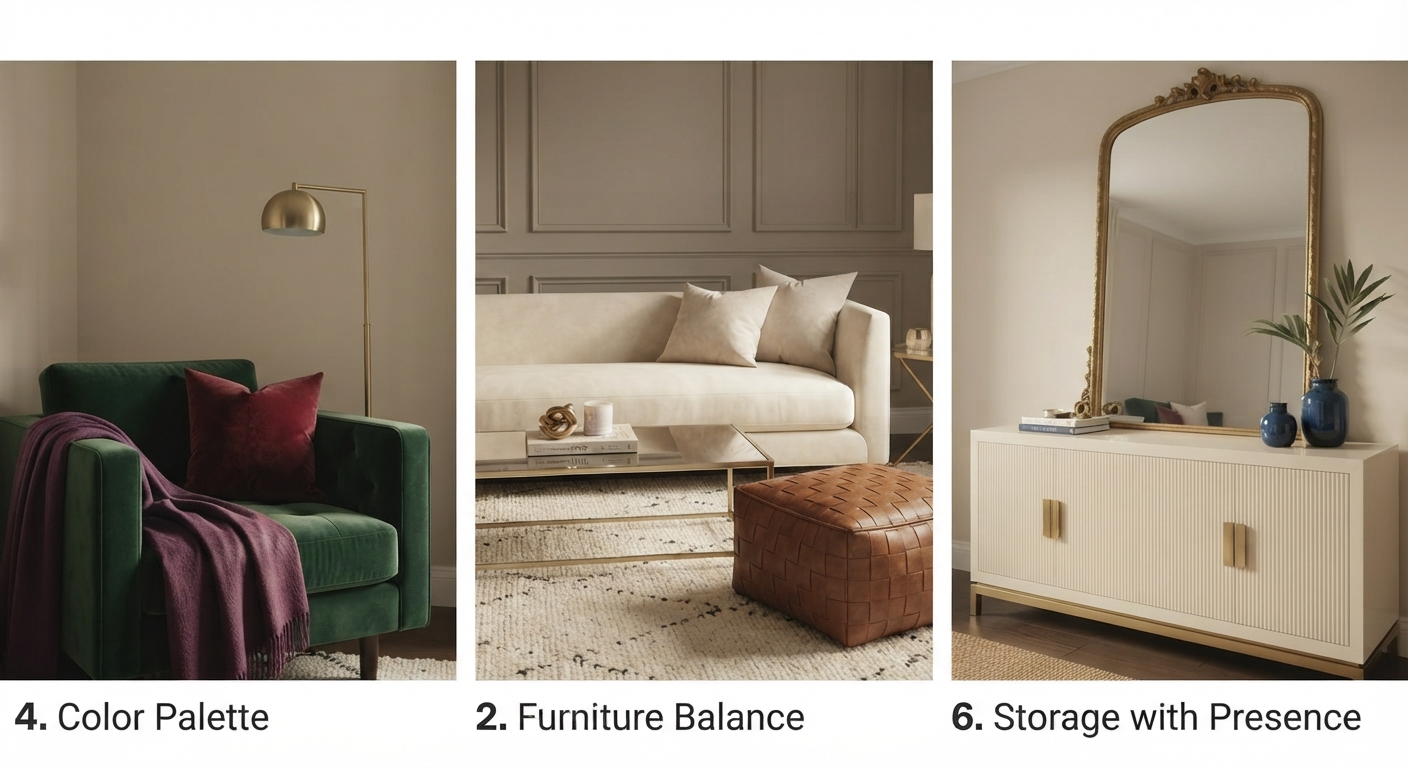
- A deep base tone—charcoal, emerald, navy, or a warm chocolate brown
- A neutral foundation—cream, ivory, or soft greige
- One metallic accent—brass, champagne gold, or brushed bronze (pick only one; never mix warm and cool metals in the same room)
- A single jewel tone pop—a deep ruby cushion, an amethyst throw, or a sapphire vase
When I redid my own living room, I kept the walls in a warm greige and let the drama come from a single emerald-velvet accent chair. It was the first time the room actually felt finished rather than “decorated.”
Furniture That Balances Glam With Comfort
A living room you’re afraid to sit in isn’t a successful design—it’s a museum. My biggest lesson here: glam furniture has to still function like real furniture.
Sofas: Velvet is the classic glam fabric, but if you have kids or pets or you just live an actual life in your house, look for performance velvet. It has the same soft, light-catching texture without the maintenance nightmare.
Coffee tables: A mirrored or lacquered coffee table with brass legs works as a subtle glam anchor. Pair it with a woven or leather ottoman nearby so the room doesn’t feel too formal for everyday use.
Accent chairs: This is where I recommend spending the most, because one striking chair — tufted, curved, or channel-backed — does more visual work than an entire matching furniture set.
Storage pieces: A lacquered credenza or a cabinet with fluted wood detailing and brass hardware gives you the glam look while hiding remote controls, chargers, and all the everyday clutter that ruins a curated look.
Lighting: The Secret Ingredient Most People Skip
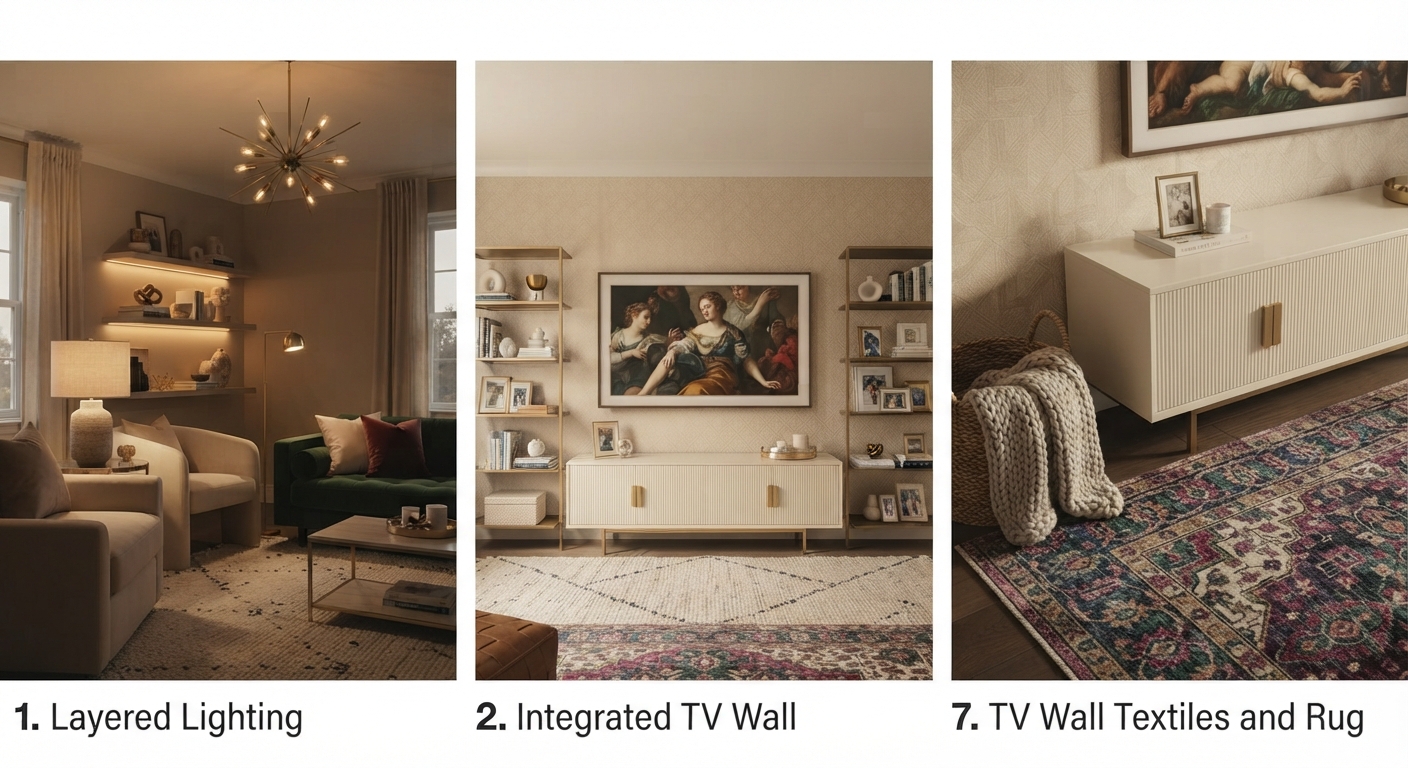
If I had to pick the single most underrated part of glam living room decor ideas, it’s lighting. You can have the perfect sofa and the perfect wall design, but flat overhead lighting will flatten the whole room.
Here’s the layering approach I now use in every project:
- Ambient light—a dimmable overhead fixture, ideally a statement chandelier or a sculptural flush mount
- Task lighting—a floor lamp near the reading chair, table lamps flanking the sofa
- Accent lighting—LED strip lighting behind a TV wall or along shelving to create depth after dark
When I added a soft brass chandelier to my own living room and swapped my cool-white bulbs for warm 2700K ones, the entire room felt like a different space. It’s a small change, but it’s the difference between a room that looks nice in photos and one that actually feels warm and inviting to sit in at night.
Designing a Living Room TV Wall Without Killing the Glam Vibe
This was genuinely my biggest challenge. A large black television can undo an otherwise elegant room in seconds. After testing several approaches with clients, here’s what consistently works for a living room TV wall in a glam setting:
Frame It, Don’t Hide It
Rather than pretending the TV isn’t there, I built it into the design. I mounted mine on a textured accent wall (the same champagne wallpaper from the entry section) and added slim brass shelving on either side for books and decorative objects. The TV now reads as part of an intentional gallery moment rather than the focal point.
Use a media console with presence.
A low, lacquered console with brass legs beneath the TV grounds the whole wall. Skip the boxy, oak-toned units — they clash with the softer, more refined glam palette.
Add Warmth With Layered Textiles
A patterned rug near the TV wall and a woven basket for blankets keeps this often “cold” corner from feeling sterile, especially in cozy living rooms where the television needs to coexist with a relaxed, lived-in feel.
Consider a Frame-Style TV
If your budget allows it, a frame-style television that displays art when not in use is one of the best living room decor ideas for glam spaces, because it removes the black rectangle problem entirely.
Can Glam and Minimalist Living Room Styles Actually Coexist?
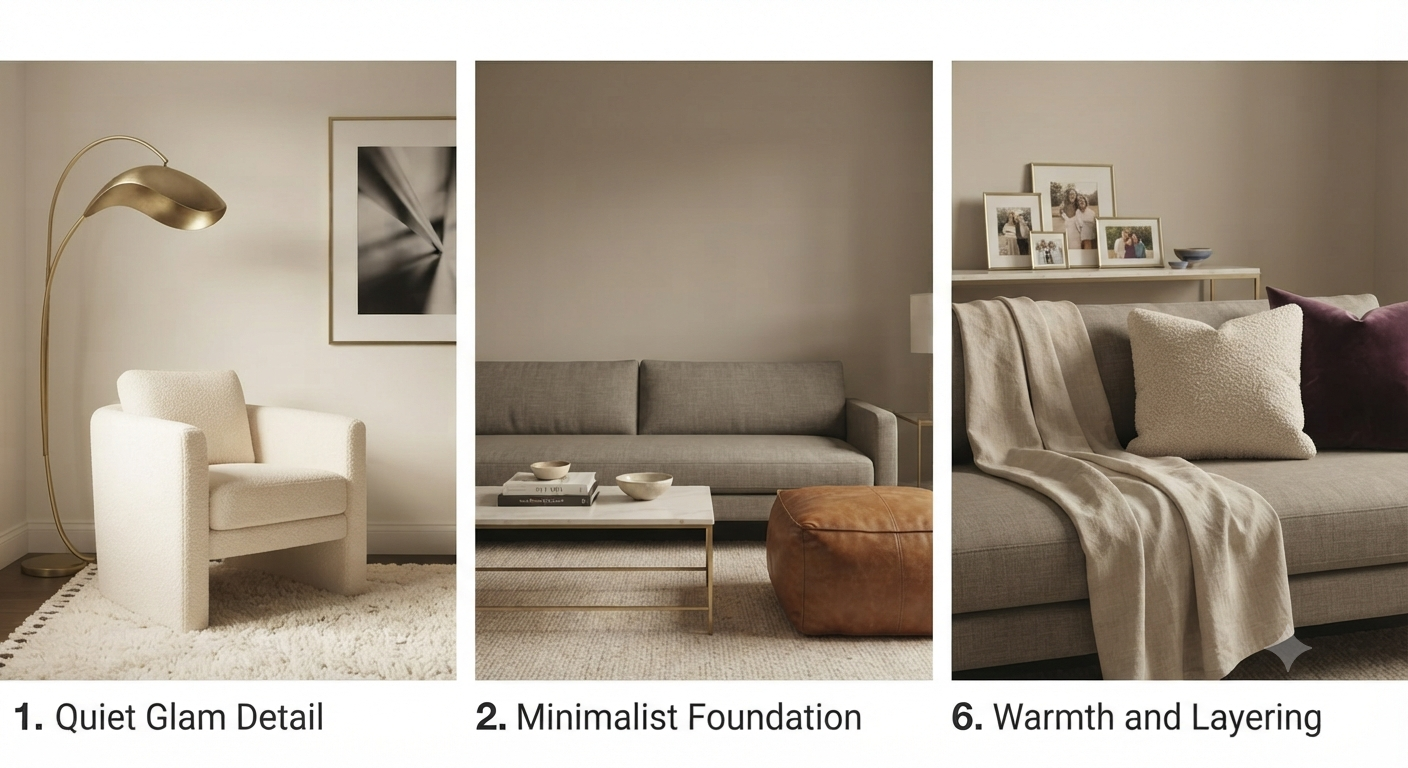
I get this question constantly, and the answer is yes—some of my favorite recent projects have been a minimalist living room with just enough glam detailing to keep it from feeling cold.
The trick is to strip back the number of decorative objects while keeping one or two high-impact glam materials. Think:
- A single sculptural brass floor lamp instead of multiple accent pieces
- One plush textured rug instead of layered patterns
- Clean-lined furniture in a rich fabric like bouclé or velvet, rather than ornately carved pieces
This “quiet glam” approach has become one of the most requested styles from clients who want a minimalist living room that still photographs with warmth and depth rather than looking empty.
Making It Feel Warm, Not Just Expensive
A common complaint I hear is that glam rooms can feel show-offy rather than welcoming. The fix is warmth, and warmth comes from layering, not from adding more shine.
Here’s what actually makes a warm living room:
- Warm-toned lighting (mentioned above, but worth repeating—this changes everything)
- Natural textures like a jute rug under a glam coffee table, or a linen throw over a velvet sofa
- Soft edges—curved furniture silhouettes feel less clinical than sharp, angular pieces
- Personal objects—a stack of real books you’ve actually read, a ceramic bowl from a trip, family photos in slim brass frames
My own turning point was adding a worn leather ottoman next to my velvet sofa. It shouldn’t have worked on paper, but it gave the whole room permission to feel lived-in rather than staged.
Styling Details That Make the Room Feel Finished
Once the big pieces are in place, it’s the smaller decisions that separate a good glam living room from a great one.
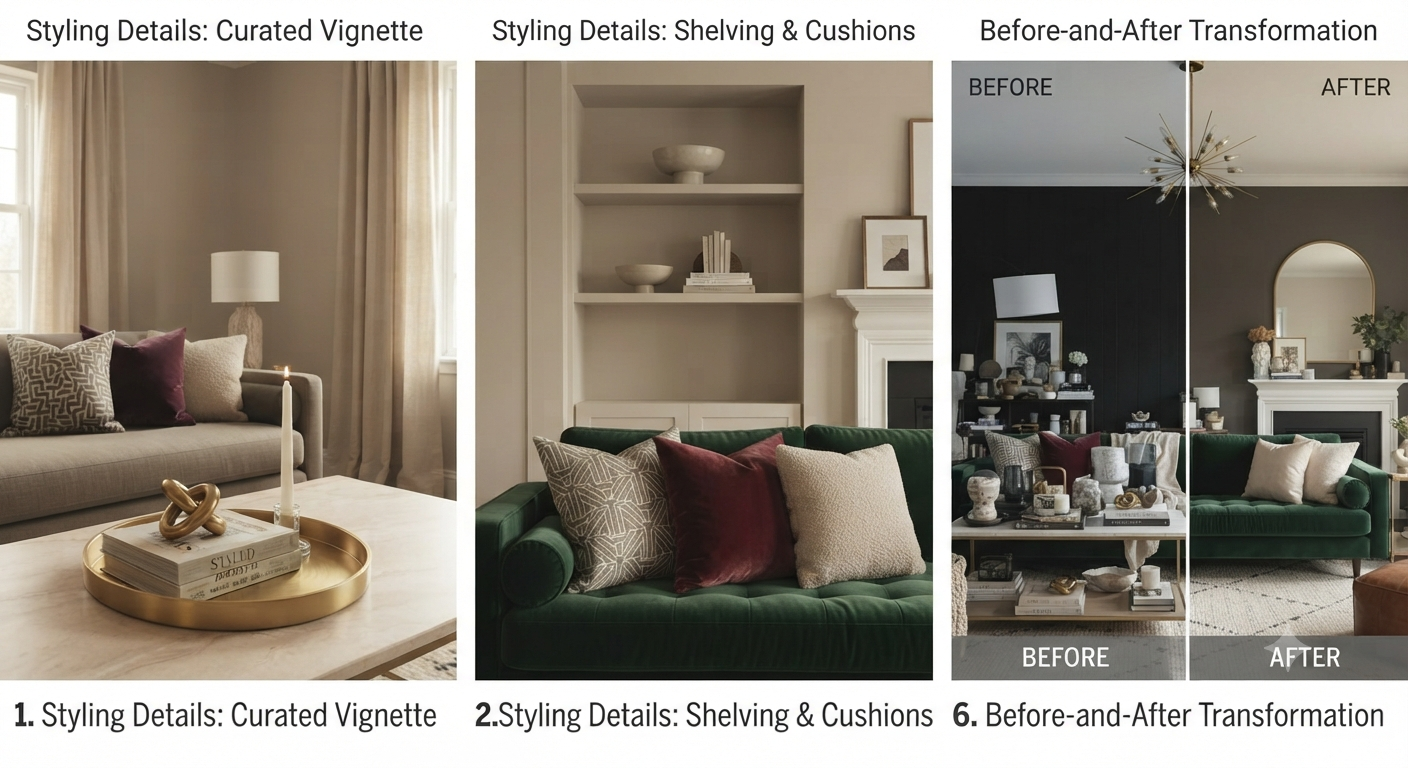
- Coffee table styling: one tray, one stack of books, one small object with height (a vase or candle), and nothing else. Overstyling a coffee table is one of the fastest ways to make a room feel cluttered instead of curated.
- Shelving: Don’t fill every shelf. Leave breathing room between objects so each piece can actually be seen.
- Cushions: three to five cushions per sofa maximum, mixing one pattern, one solid velvet, and one textured neutral.
- Curtains: Floor-to-ceiling drapery in a soft, heavy fabric instantly adds height and drama, and it’s one of the simplest living room decor ideas that consistently transforms a space.
Five Mistakes I Made So You Don’t Have To
- Mixing gold and silver metals in the same room. Pick one metal finish and stay consistent throughout the space.
- Buying an entire matching furniture set. It looks like a showroom, not a home. Mix eras and finishes instead.
- Skipping window treatments. Bare windows undercut even the most beautifully designed glam living room.
- Overloading the walls. I once hung four different wall design elements in a single room. It looked chaotic. One or two focal wall moments is plenty.
- Forgetting the rug. A room without a properly sized rug always feels unfinished, no matter how good the furniture is.
My Own Before-and-After: What Actually Changed the Room
When I finally got my own living room right, three changes made the biggest difference, in this order:
First, I repainted my accent wall in a warm charcoal instead of the stark black I’d originally chosen, which softened the whole room instantly. Second, I swapped my cool-toned lighting for warm bulbs and added a dimmer switch, which changed the entire mood of the space after sunset. Third, I removed nearly half of my original decor objects—the room had been trying to say too many things at once, and editing it down let the good pieces actually stand out.
None of these changes cost very much money. What it cost was the willingness to admit that “more” wasn’t working and that a truly elegant glam living room is built on a handful of confident decisions rather than a pile of decorative purchases.
Designing a Glam Living Room in a Small Space
Not everyone has a sprawling living room to work with, and honestly, some of my favorite projects have been in small apartments where every decision had to earn its place. If you’re working with a compact footprint, here’s what I’ve learned actually works.
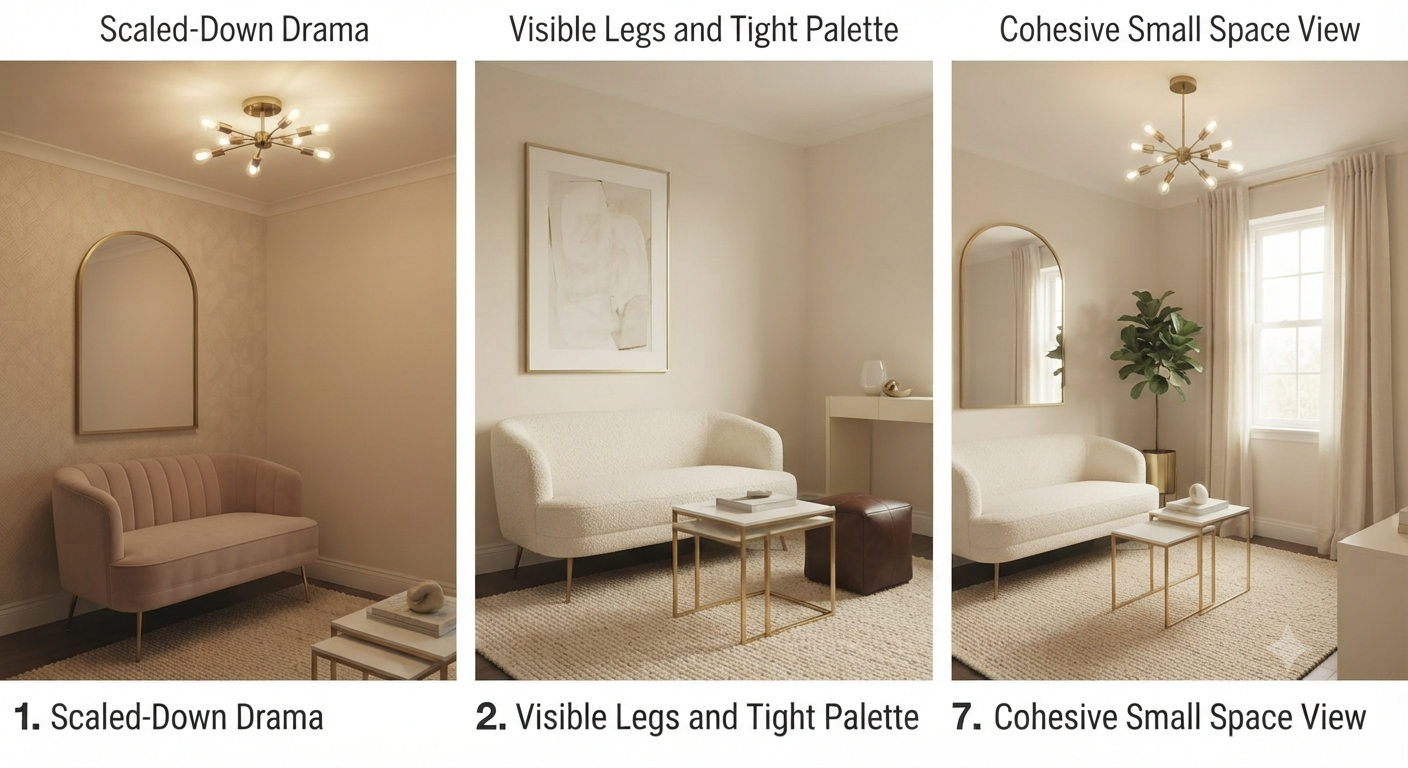
Scale down the statement pieces, not the drama. A small room can still hold a bold wall design or a striking light fixture — you just need to choose a scaled-down version. A mini chandelier or a semi-flush mount with the same brass detailing gives you the same glam moment without overwhelming a low ceiling.
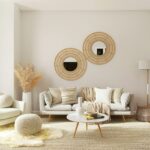
Use one large mirror instead of scattered decor. In a tiny living room, a single oversized mirror leaning against a wall or mounted above the sofa does double duty: it reflects light, makes the ceiling feel taller, and acts as your glam statement piece all at once.
Choose furniture with visible legs. Sofas and chairs that sit up on slim brass or wood legs, rather than pieces that sit flush to the floor, make a small room feel more open because you can see the floor continue underneath them.
Keep the palette tighter. In a larger room, you can get away with more contrast. In a small glam living room, sticking to two or three tones total — rather than four or five — keeps the eye moving smoothly instead of getting stopped by too many color changes.
I redesigned a client’s one-bedroom apartment living room using exactly this approach: a small brass chandelier, one large arched mirror, and a tight palette of cream, chocolate, and brass. It photographed like a much larger space, and more importantly, it felt calm rather than cramped to actually live in.
Seasonal Styling for a Glam Living Room
One thing that surprised me after finishing my own glam living room was how much the space could shift with the seasons without losing its identity. This is one of those living room decor ideas that people rarely talk about, but it makes a real difference in how “finished” a room feels year-round.
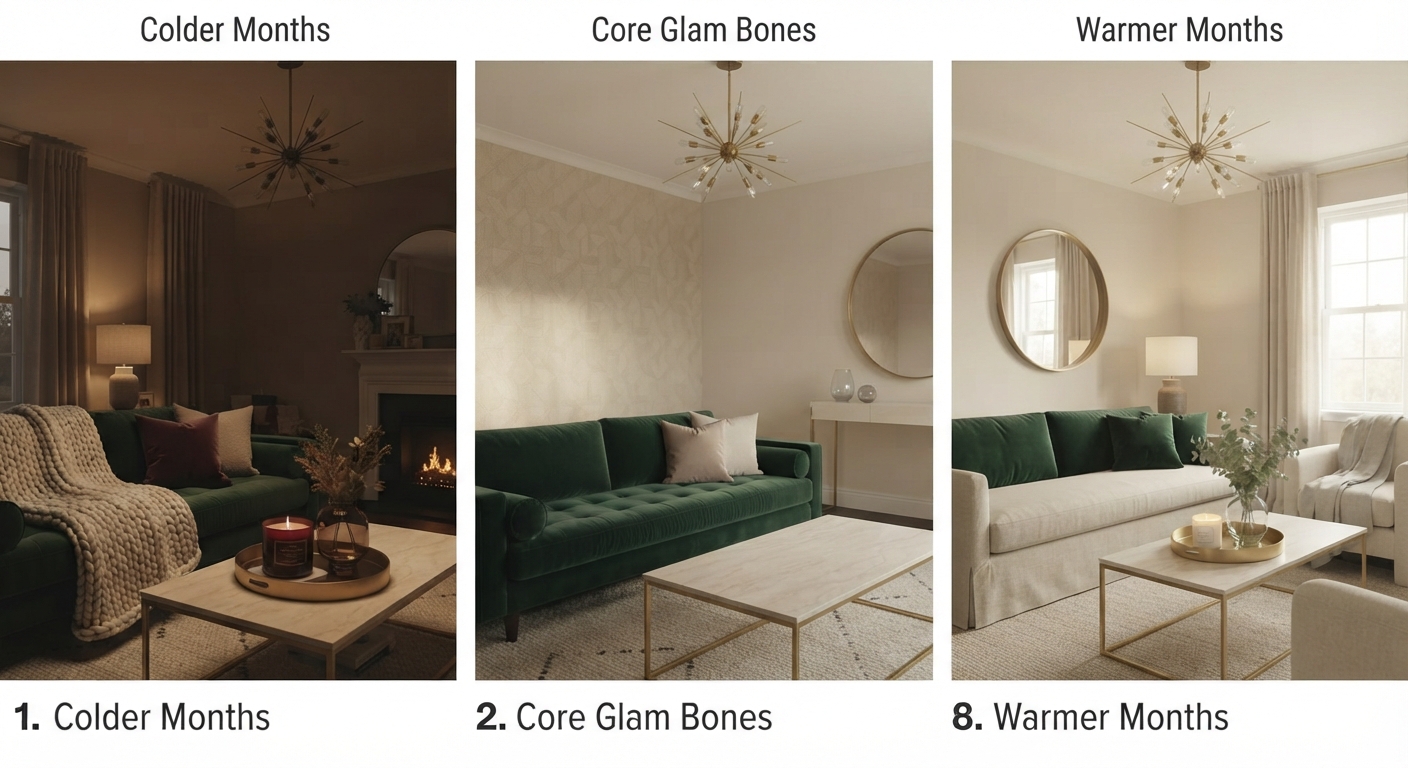
For colder months, I swap in heavier textures—a chunky knit throw over the velvet sofa, a deeper-toned candle on the coffee table, and slightly dimmer, warmer lighting in the evenings. It leans into the warm living room feeling without changing a single piece of furniture.
For warmer months, I lighten things up with a linen slipcover on an accent chair, a lighter-colored vase of fresh greenery, and slightly brighter (but still warm-toned) lighting. The brass and velvet elements stay exactly where they are—only the small, swappable textiles change.
This approach means you’re not redecorating four times a year. You’re making five or six small textile swaps that keep the room feeling current and considered, while the actual glam bones of the space—your wall design, your lighting, and your furniture—stay exactly as you designed them.
A Realistic Budget Breakdown
People often assume a glam living room has to be expensive, and while it certainly can be, I’ve built versions of this look at very different price points for different clients. Here’s roughly how I’d prioritize spending if you’re working with a limited budget.
Splurge on: lighting and one key upholstered piece (the sofa or the accent chair). These two elements do the most visual work in the room and are touched or seen every single day.
Spend moderately on your rug and your window treatments. These add texture and height, respectively, and mid-range options in the right color and texture can look far more expensive than their price tag suggests.
Save on accessories, art, and smaller decorative objects. This is where thrifted finds, vintage brass candlesticks, or budget-friendly frames can stand in beautifully, especially once they’re surrounded by the higher-quality anchor pieces.
Skip entirely if money is tight: an entire matching furniture set. As I mentioned earlier, this rarely looks as good as a mixed, curated collection anyway, so there’s no reason to overspend here.
When I first put together my own space, I spent the bulk of my budget on a single quality sofa and a chandelier, then filled in everything else slowly over several months. The room felt complete far sooner than I expected, because those two elements carried so much of the design.
How to Shop for Glam Pieces Without Overspending
A few practical habits I’ve picked up over the years of sourcing furniture and decor for clients:
- Buy the rug last, not first. Once your furniture and wall colors are settled, it’s much easier to find a rug that ties everything together rather than building a room around a rug you fell in love with too early.
- Look at vintage and consignment shops for brass accents. Older brass pieces often have a warmer, richer patina than brand-new brass, and they tend to cost a fraction of new designer pieces.
- Test fabric swatches in your actual room. Velvet and lacquer both read very differently under warm lamp light versus daylight, so always bring a sample home before committing to a large piece.
- Don’t rush the lighting decision. This is the one category where I tell clients to wait for the right piece rather than settling, because a mismatched light fixture is one of the hardest things to disguise once everything else is in place.
Bringing in Greenery Without Breaking the Mood
I used to think plants and glam decor didn’t mix—I pictured tropical leaves clashing with velvet and brass. It turns out the opposite is true. A well-placed plant softens all that structure and shine, and it’s one of the easiest living room decor ideas to implement without spending much at all.
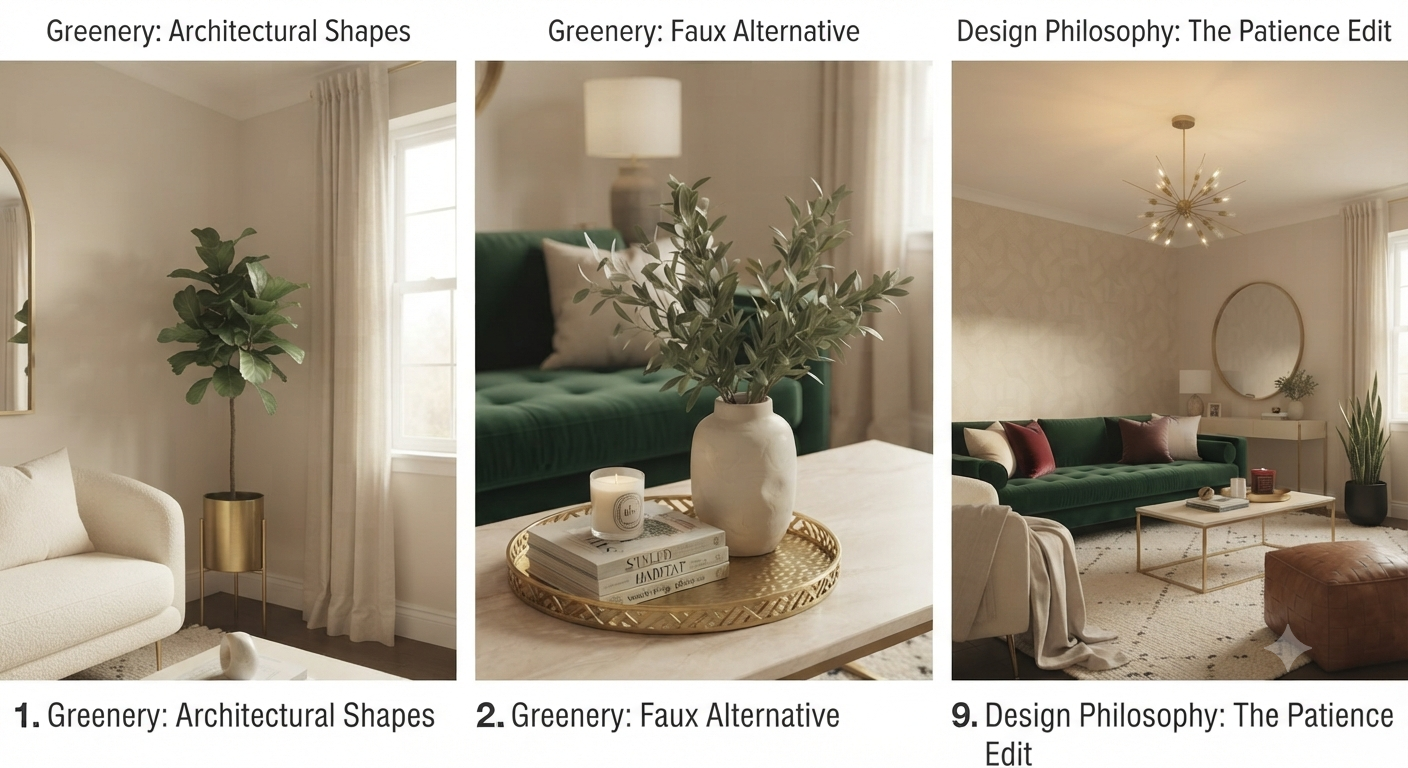
My rule of thumb: choose plants with simple, architectural shapes rather than busy, sprawling ones. A single fiddle-leaf fig in a tall brass planter, or a snake plant in a matte black pot, adds height and life to a corner without competing with your wall design or your lighting. I keep the number of plants low—usually just one or two per room—because too many can pull the eye away from the pieces you actually want noticed.
If you don’t have a lot of natural light, don’t force it. A well-made faux olive branch arrangement in a ceramic vase can do the same visual job as a live plant, and in a glam living room, it’s really about the shape and the container more than whether it’s real.
Why I Keep Coming Back to This Style
People sometimes ask why, after years of trying different design directions in my own home, I keep returning to a glam living room aesthetic. Honestly, it’s because this style rewards patience. It’s not something you can throw together in a weekend from a single big-box store trip. It asks you to slow down, choose one hero element, get the lighting right, and then edit constantly until only the pieces that earn their place are still in the room.
That process taught me more about design than any client project ever could, because I had no deadline pushing me and no one else’s taste to consider. I could genuinely test what worked and what didn’t, live with a choice for a few weeks, and change it if it wasn’t right. That’s really my biggest piece of advice for anyone starting their own glam living room: don’t rush it. Buy the sofa. Live with it for a while before choosing the rug. Get the lighting right before you worry about accessories. The room will tell you what it needs if you give it the time.
Frequently Asked Questions
Is a glam living room too formal for everyday family life? Not if you balance it correctly. Performance fabrics, warm lighting, and a few relaxed textures (like a linen throw or a leather ottoman) keep the space functional for daily life while keeping the elevated look.
What’s the difference between glam and traditional luxury decor? Traditional luxury decor leans on ornate, heavily carved furniture and formal symmetry. Glam decor borrows the richness of materials—velvet, brass, and lacquer—but pairs them with cleaner, more modern silhouettes.
How do I add glam touches on a smaller budget? Start with lighting and textiles. A warm-toned lamp, a velvet cushion cover, and a brass-framed mirror can shift the whole feeling of a room for a fraction of the cost of new furniture.
What colors work best for a warm living room with a glam feel? Deep, warm neutrals like chocolate brown, warm greige, and terracotta pair beautifully with brass accents. Cooler tones like navy or emerald still work but need warm lighting to avoid feeling cold.
Do I need a chandelier to make a room feel glam? Not necessarily. A chandelier is one of the fastest ways to establish the mood, but a sculptural floor lamp or a pair of statement table lamps with metallic bases can carry the same weight if a chandelier isn’t practical for your ceiling height or your budget.
How many glam elements should one room have? As a general guide, I tell clients to pick no more than three “glam markers” per room—for example, one metallic finish, one velvet piece, and one dramatic lighting fixture. Beyond that, the room starts competing with itself instead of feeling curated.
Will a glam living room go out of style? Trends shift, but the underlying principles — rich materials, warm lighting, and restrained color palettes — have stayed relevant for decades because they’re rooted in comfort and craftsmanship rather than a passing aesthetic fad. Keeping your glam elements classic rather than trend-driven is the best way to make sure the room still feels right years from now.
Final Thoughts
Designing a glam living room isn’t about following a checklist — it’s about making a series of confident, restrained choices and trusting that less really does read as more expensive. I learned this the slow way, through a living room that felt “off” for months before I figured out what it actually needed. If you take one thing from my experience, let it be this: pick your hero element, commit to warm lighting, and edit ruthlessly before you add anything new. That’s the actual difference between a glam living room that looks like a photo and one that feels like home.
Read More: 32 Earth Tone Bathroom Designs That Will Turn Your Space Into a Warm, Grounded Sanctuary


Pingback: Living Room Decor Ideas I Actually Used in My Own Home: A Designer's Honest 2026 Guide - Ideas Home Decor